
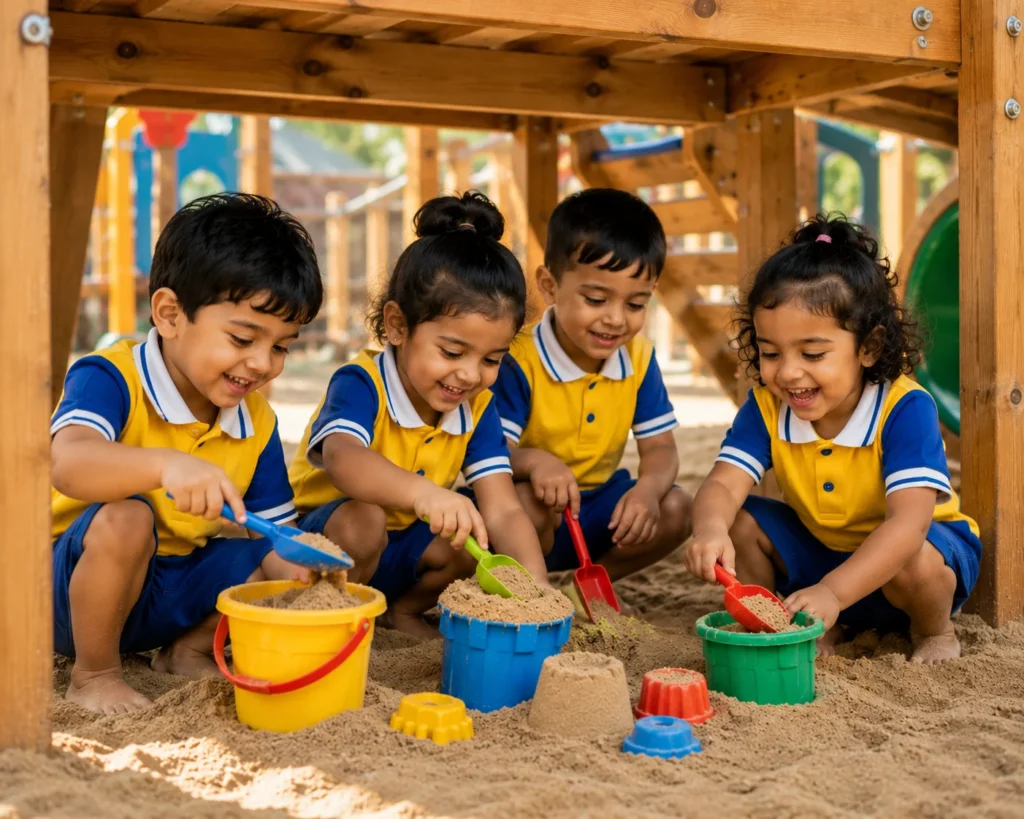
The Day Potty Training Finally Worked
I had genuinely started wondering whether we’d still be navigating this particular challenge by the time my daughter reached primary school. We’d tried nearly every method suggested by well-meaning relatives, parenting books, and countless late-night internet searches — sticker charts, special celebration snacks, patient encouragement, occasional bribery I’m not entirely proud of admitting to. Nothing seemed to genuinely stick, leaving me feeling increasingly discouraged despite my daughter’s obvious general intelligence and capability across nearly every other developmental area.
Then, almost unexpectedly, everything shifted within a single week after she started attending Crayons Schools, leaving me both relieved and slightly bewildered about what had specifically changed after months of our own largely unsuccessful efforts at home.
The Months of Trying Everything at Home
I want to be honest about how genuinely frustrating those preceding months felt, not because I doubted my daughter’s eventual capability, but because I’d exhausted seemingly every strategy without any meaningful, lasting progress. She understood conceptually what we were asking of her. She simply seemed uninterested in consistently applying that understanding, preferring the comfort and familiarity of her established routine over any genuine motivation to change.
I remember specifically feeling discouraged after yet another unsuccessful week, wondering privately whether I was somehow approaching this particular challenge incorrectly, despite genuinely trying every reasonable strategy available to me.
Why This Shifted So Quickly After Starting School
I didn’t initially expect starting preschool would meaningfully affect this particular ongoing struggle, assuming this remained primarily a home-based developmental milestone I needed to independently manage. Within her very first week at Crayons Schools, though, her teacher mentioned something during pickup that genuinely surprised me: “She’s been using the toilet consistently today, completely on her own initiative.”
I remember standing there slightly stunned, genuinely uncertain how months of our own concentrated effort at home had achieved considerably less progress than what appeared to happen almost immediately within her new classroom environment.
What Actually Made the Difference
Curious about this unexpected shift, I asked her teacher directly what specifically might have contributed toward this sudden progress. She explained patiently that peer influence often accomplishes what parental encouragement alone sometimes cannot. Watching her classmates confidently and routinely use the toilet themselves, without any particular fuss or special attention, seemed to provide exactly the kind of natural, low-pressure motivation that our own concentrated home efforts hadn’t quite managed to replicate.
“Children often respond differently to peer example than to direct parental instruction,” she explained. “It’s not about her trusting you less. It’s simply a different, equally valid pathway toward the same eventual outcome.”
Why Peer Influence Worked Where Direct Instruction Hadn’t
This particular explanation genuinely reframed how I understood this entire process. I had assumed, incorrectly, that consistent parental encouragement alone should logically produce the fastest, most reliable results. Understanding that watching her peers navigate this same milestone naturally, without any explicit instruction or pressure, actually provided more effective motivation helped ease whatever quiet frustration I’d been carrying about our own seemingly unsuccessful home efforts.
The Structured Routine That Reinforced This Progress
Beyond simple peer influence, I noticed how significantly the structured, consistent daily routine at Crayons Schools reinforced this particular developmental progress. Regular, predictable bathroom breaks built naturally into their daily schedule provided exactly the kind of consistent opportunity and gentle reminder that our more sporadic, less structured home routine hadn’t quite managed to establish as reliably.
Why I Felt Simultaneously Relieved and Slightly Embarrassed
I’ll admit feeling a complicated mixture of genuine relief and slight embarrassment upon learning how quickly this transition happened within her classroom environment, compared to our own considerably more prolonged efforts at home. I wondered, briefly, whether I’d somehow failed at something that apparently resolved itself relatively quickly within a different environment.
Her teacher reassured me, though, that this pattern happens frequently, that our home efforts likely provided essential foundational understanding that simply needed the right environmental context and peer example to fully activate into consistent, reliable practice.
Why This Taught Me Something Important About Development
This particular experience taught me something valuable about early childhood development more broadly — that different environments and social contexts can genuinely accelerate certain developmental milestones in ways that purely individual, parent-led efforts sometimes cannot replicate as effectively. This isn’t a reflection of parenting inadequacy, but simply an acknowledgment that children often respond to different motivational contexts in genuinely different ways.
Celebrating This Milestone, However It Eventually Arrived
Regardless of exactly what combination of factors ultimately contributed toward this particular breakthrough, I found myself genuinely celebrating alongside my daughter, who seemed rightfully proud of her own accomplishment, entirely unaware of how significantly this particular milestone had weighed on my own parental mind throughout the preceding months.
Why the Right School Environment Supports This Kind of Development
I’ve come to appreciate how significantly the right preschool environment can support various developmental milestones beyond academic learning alone, providing structured routine, positive peer influence, and consistent reinforcement that complement whatever efforts parents are simultaneously making at home.
What I’d Tell Other Parents Facing Similar Frustration
If you’re currently navigating your own version of this particular challenge, feeling discouraged despite genuine, consistent effort at home, I want you to know that sometimes, additional environmental factors — peer influence, structured routine, a different social context — can provide exactly the kind of support needed to finally achieve progress that purely individual efforts hadn’t quite managed alone.
Support Your Child’s Development With the Right Environment
If you’re searching for a preschool franchise that provides the kind of structured, supportive environment capable of reinforcing important developmental milestones alongside your own efforts at home, we’d love to welcome your family to Crayons Schools. Book a campus visit today, and discover how the right environment might provide exactly the support your child needs for this and countless other important developmental milestones.